Binding Wires
Binding wires are flexible, strong metal wires primarily used to tie and secure reinforcement bars (rebars) in concrete structures. They are made from annealed mild steel or galvanized iron, allowing them to bend easily around joints without breaking to ensure structural integrity during concrete pouring. Construction (Rebar Tying): Typically 18 to 20 Gauge, this wire secures steel bars at construction sites so they do not displace when pouring concrete.Industrial & Electrical: Used to bundle cables or tie raw materials together for stable transit.Crafts & Bookbinding: Also known as "wiro" or double-loop wire, this secures punched notebook pages and calendars.Consumption & StandardsIn construction projects, a standard thumb rule dictates that for every 100 kg of steel reinforcement, you will need approximately 0.9 kg to 1.3 kg of binding wire. This translates to about 9 kg to 13 kg of wire for one metric ton of steel.
High Tensile Bars
High-tensile Thermo-Mechanically Treated (TMT) bars are the backbone of modern reinforced concrete construction, offering a high yield strength (typically 500 MPa to 600 MPa) and superior ductility. They are specifically designed to absorb dynamic loads and handle heavy stress.Key FeaturesHard Outer, Soft Inner: The manufacturing process creates a hardened exterior for strength and a ductile, softer core for excellent bendability.Earthquake Resistant: The balance of high tensile strength and high elongation allows structures to flex during seismic activity.Corrosion & Fire Resistance: Advanced thermal treatments reduce residual stresses, limiting rust and granting high thermal stability (up to 500°C).Common High-Tensile GradesFe 500 / 500D: The most common for residential and commercial buildings. The "D" signifies extra ductility, ideal for earthquake-prone zones.Fe 550 / 550D: Provides 10% more load-carrying capacity than Fe 500, commonly used for high-rises, bridges, and heavy structures.Fe 600: The highest tensile grade, utilized for industrial foundations, heavy marine structures, and high-load commercial projects.
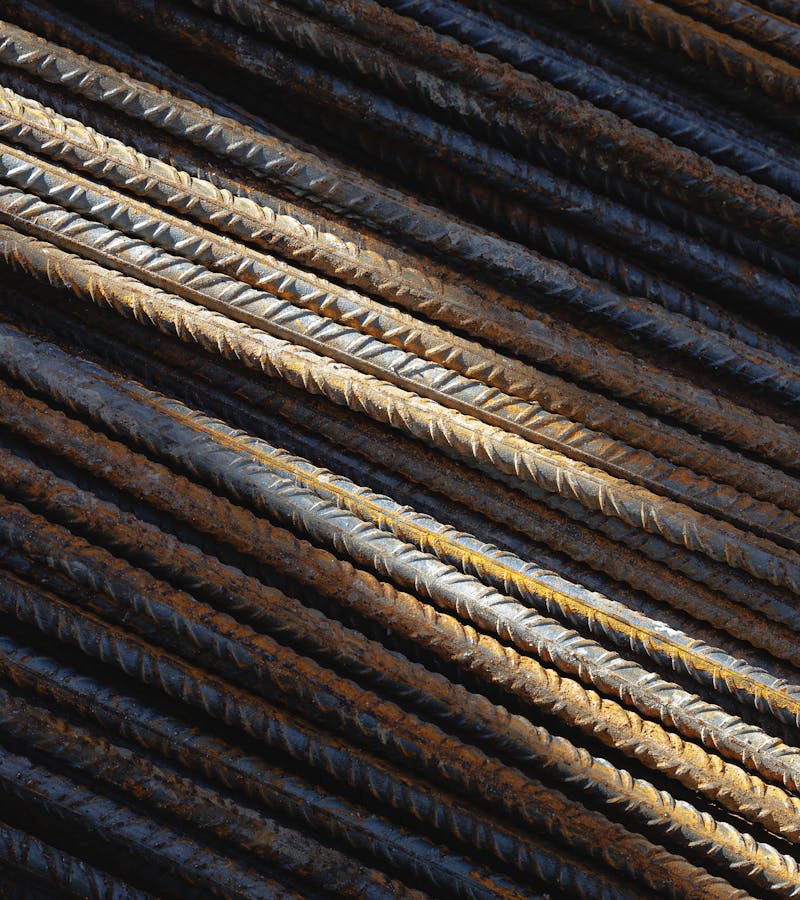
High Strength Bars
High-strength Thermo-Mechanically Treated (TMT) bars feature a hardened outer layer and a soft ferrite-pearlite core. This structure provides excellent load-bearing capacity, superior bendability, and high earthquake and corrosion resistance, making them essential for modern RCC construction.Commonly Used High-Strength GradesFe-500 / Fe-500D: The standard recommendation for most residential, commercial, and multi-story construction. The "D" denotes higher ductility, which is excellent for seismic zones.Fe-550 / Fe-550D: Features higher tensile strength than Fe-500, making it ideal for heavy-load structures, high-rise buildings, and bridges.Fe-600: Typically reserved for massive industrial infrastructure, heavy-duty foundations, and power plants where extreme load-bearing is required.